![[personal profile]](https://www.dreamwidth.org/img/silk/identity/user.png)


Entry tags:
Fictional anosmics
Today (27th Feb) is anosmia awareness day. For those who aren't aware, anosmia means that you don't have a sense of smell; it's a similar concept to being blind or deaf. There are two forms of this: congenital anosmia means that you were born that way, whereas acquired anosmia means that you started out being able to smell but then you lost the ability somewhere along the way (e.g. after an illness).
Personally, I have congenital anosmia, although it took me several years to figure this out! As a young child, I was told that everyone had a sense of smell, so I naturally assumed that I did too. I learnt to mimic the behaviour of people around me so that I could react appropriately. For instance, if I heard someone fart, I could clutch my nose, pretend to be choking, and say things like "Gah! Someone open a window! My god, dude, what did you eat?!" At the same time, I was baffled by the way that my friends sometimes seemed to have X-ray vision, e.g. they'd know what my mum was cooking for dinner even when we were upstairs with no line of sight.
I eventually confronted this when I was about 10. This was in the 1980s, and the TV guide included a "scratch and sniff" card. The idea was that a particular TV program would make use of this: they'd flash up a blue square in the corner of the screen, then you'd scratch off the blue square on your card, and you'd smell something that matched what you saw on screen. I assume that the goal was to make a more immersive experience, similar to 3D, but it doesn't really seem to have caught on. Anyway, I scratched off one of the squares and sniffed it, but nothing happened. I assumed that square didn't work, so I went through the rest of the card, with a similar lack of reaction. In hindsight, I feel slightly guilty about depriving the rest of my family of the opportunity to use the card as intended, but it did lead me to an important realisation.
This predates the World Wide Web, and I'd never heard of anyone else with this condition. So, as far as I knew I was the only person in the world like this. That's why it took me so long to believe it; in a similar way, I've never seen my own lungs, but I'm pretty sure I have them (because everyone does), and it would take a lot of evidence for me to think otherwise.
Once I'd accepted this, I went to see a doctor, who was also sceptical: he'd never heard of this before, and thought that I was just making it all up for attention. So, he did some tests where he blindfolded me and then waved stuff under my nose, the idea being that I wouldn't be able to control my instinctive reaction (or revulsion). I passed those tests, but he couldn't help, so he referred me elsewhere. The second doctor looked at the first doctor's notes and basically said: "That quack doesn't know what he's talking about, everyone has a sense of smell. You may have fooled him, but you won't fool me, let's run those tests again." Again, I passed the tests, but it didn't achieve much. An X-ray revealed a bone blockage in my nose, and I had surgery to drill through it. Unfortunately, the only result was that I became susceptible to hayfever, when I was immune before. At this point, I'm basically resigned to the idea that I'm never going to be cured.
Anyway, things would have been a lot easier for me if I'd actually known that anosmia existed, i.e. that I might fall into an existing category rather than being some unprecedented freak of nature. That brings me back to where I started: I want to raise awareness, so that other people have an easier time. Even if you can smell, just being willing to believe that other people can't (rather than subjecting them to the Blindfold Trial of Doom) would be helpful.
This is where representation helps: it's nice to see stories about people like you, and it could also be someone's first exposure to the idea that anosmia exists. So, I've been making a list of "fictional characters with anosmia" for several years, and here are my top 10. (I was planning to do this as a YouTube video, with the relevant clips as supporting evidence, but I ran out of time and I wanted to get something out today. Consider this a sneak preview!) I've sorted them based on a couple of factors: how prominent is the character, and how significant is their anosmia to the plot?
I've only included characters who explicitly state that they can't smell anything. There are several others who never mentioned smells, and therefore it's possible that they're anosmic. However, that's where you get into the realm of subtext and authorial retcons (e.g. "Dumbledore was gay but it never came up in the books"). That doesn't help to raise awareness, so they don't count for my purposes.
10. Dr Bradbury from "Damnation Station" (2000AD Prog 1692).
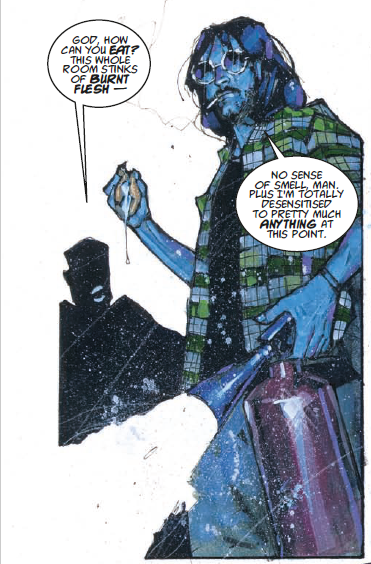
There's a scene set after an attack, where the doctor starts eating a sandwich. Someone else is surprised:
"God, how can you eat? This whole room stinks of burnt flesh -"
"No sense of smell, man. Plus I'm totally desensitised to pretty much anything at this point."
The comic doesn't specify whether his anosmia is acquired or congenital, and it's never mentioned again.
That's about all I have to say about that one; the fact that this made it into my "top 10" gives some idea about the paucity of suitable candidates!
9. Chris from Cheesoid ("That Mitchell and Webb Look", S2 E3).
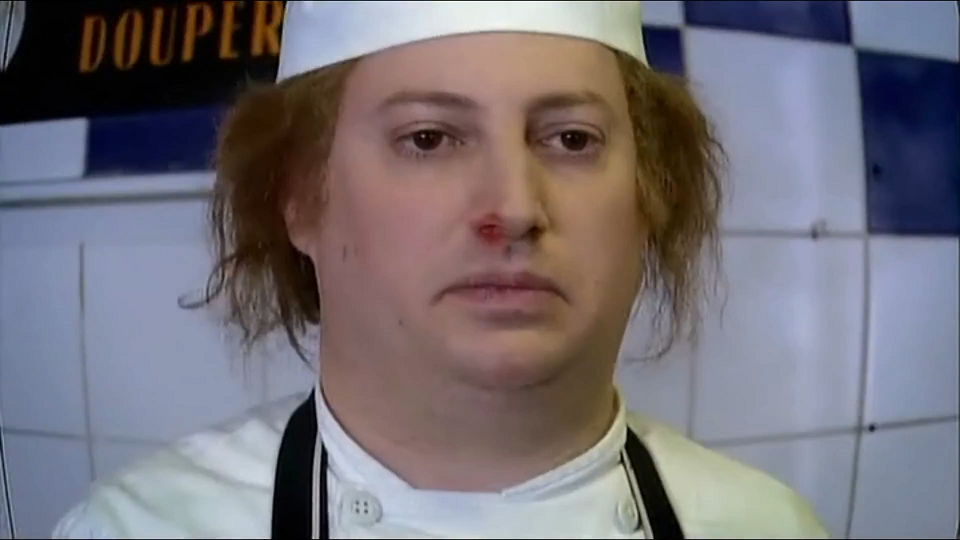
Chris is a chef who gets mugged. The attacker breaks his nose, removing his sense of smell (acquired anosmia), so he tries to build a robot that can smell for him. The TV series is a sketch show, so this character only appeared for a few minutes. However, the anosmia was essential to the plot.
8. Twoflower (Terry Pratchett's "Discworld" novels).

In "The Light Fantastic" (p228 of my paperback copy), a group of characters are approaching Ankh-Morpork and Pratchett comments on how bad it smells. "Rincewind sat bolt upright and said 'We're here', Bethan went pale and Twoflower, who had no sense of smell, said, 'Really? How can you tell?'"
Twoflower only appeared in 3 books out of the series, but anyone who's read those books will remember who he was, so I'd say that he's a fairly prominent character in the series. However, this was just a brief aside (similar to Dr Bradbury in entry 10); it wasn't particularly important to the plot, and it never came up again. Similarly, the source of his anosmia was never revealed.
7. Mr Blair ("Scrubs" S2 E5).
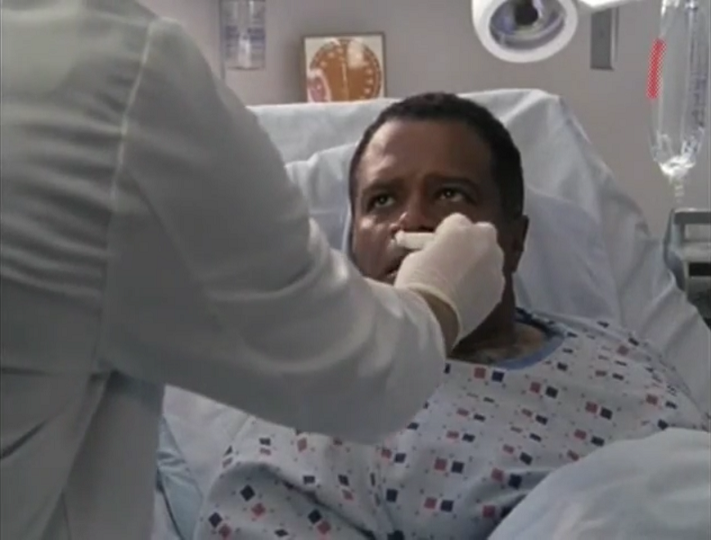
This was a "patient of the week" scenario, where he developed anosmia as a new symptom (i.e. it was acquired). So, it was significant to the plot of this episode, but most people who've watched the whole series probably wouldn't remember it at all. It mainly struck me as notable because of the way it's introduced. The doctor (JD) was paged, and the nurse reported that "The patient is complaining of anosmia." The nurse didn't explain beyond that, and the doctor knew what the word meant, although there was some expository dialogue for the audience's benefit. They also believed the patient immediately, rather than accusing him of lying. After my experiences with the medical profession, this was a welcome change!
6. Mr Wormold ("Betty Blue Eyes").
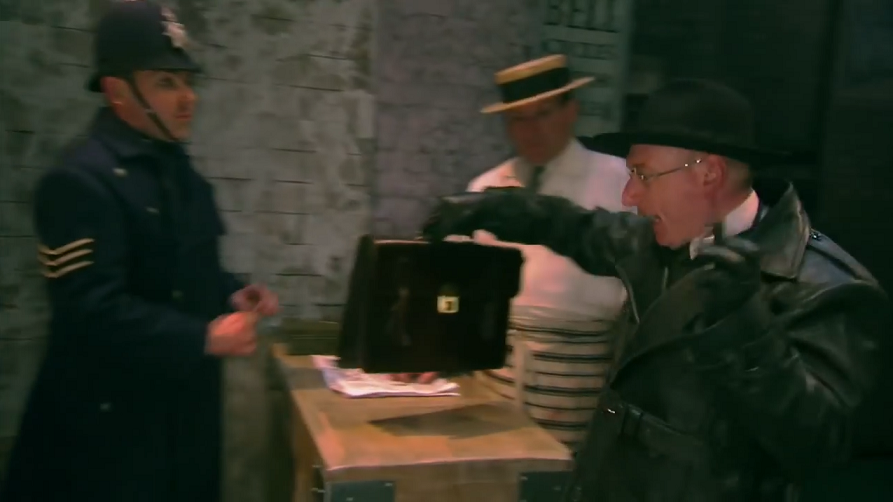
"Betty Blue Eyes" is a musical that's adapted from a film ("A Private Function"), although I've only seen the stage version. It's set in the late 1940s: after the war, but while food rationing was still going on. A group of people in a village decide to raise their own pig so that they can get extra meat. Apparently this was illegal (I'm not sure why), and a meat inspector started snooping around.
At one point, the inspector (Mr Wormold) was talking to his landlady. She asked whether he'd enjoyed his meal, and he said:
"I don't enjoy food, Mrs Forbes. I have no sense of taste, no sense of smell. I had German measles as a child."
So, this is a case of acquired anosmia. I wouldn't say that it was integral to the plot, but perhaps it informs his character, i.e. he's not going to be bribed by extra food because he doesn't get any pleasure from eating it. The character is significant to the story.
5. Marianne ("Futurama", S10 E12).

Dr Zoidberg starts dating a flower seller. Nobody else can understand how she puts up with his stench, until it's explained that she was born without a sense of smell. The main plot involves a moral dilemma for Zoidberg: he could perform surgery to give her a nose transplant, but then she would realise what he smells like and dump him. So, her anosmia is absolutely essential to the plot, although the character only appeared in one episode.
4. Angel Dynamite ("Scooby Doo: Mystery Incorporated", S1 E16).
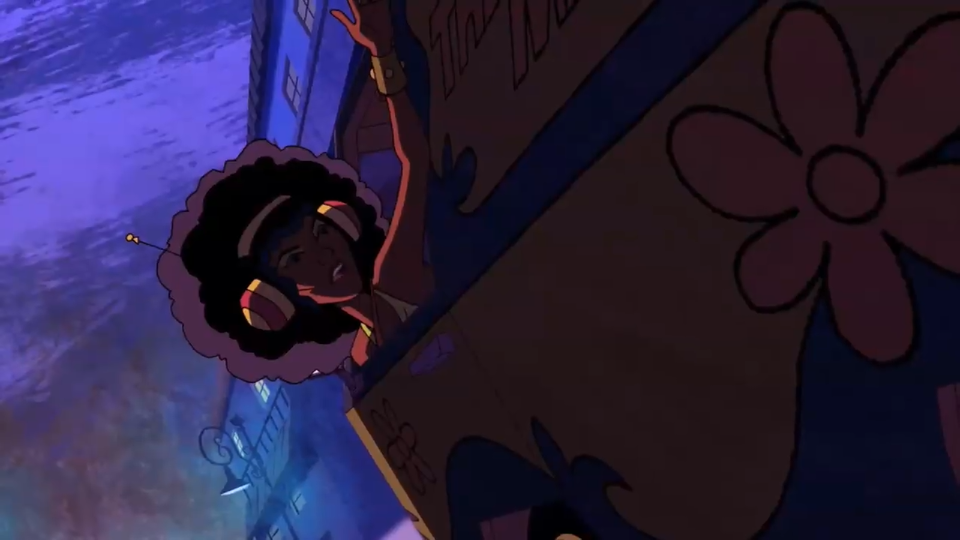
I started watching this series after I'd heard about an anosmic character, but it's actually really good on its own merits, so I highly recommend it.
One of the supporting characters is Skipper Shelton, who's basically a parody of Captain Ahab: a clam cut off his nose, so now he runs a clam restaurant as a form of revenge. In an early episode, they established that he could smell, which doesn't really make sense. So, a dishonourable mention there. However, the series redeemed itself later on.
In "Where Walks Aphrodite", a chemist zaps everyone in town with a love potion (based on pheremones). Scooby-Doo is immune because he's a dog, but the humans are all out of action. Or rather, all but one: Angel Dynamite was born with no sense of smell, so she doesn't get infected. I'm honestly not sure whether pheremones work on anosmics; the bigger question is whether they work at all, given that it's all supposed to be subconscious. Still, I'll accept it for the purposes of the story.
Now we're making progress: Angel appeared in most episodes of the series, so she's a major character and her anosmia was relevant to the plot!
3. Selma Bouvier ("The Simpsons", S3 E21).
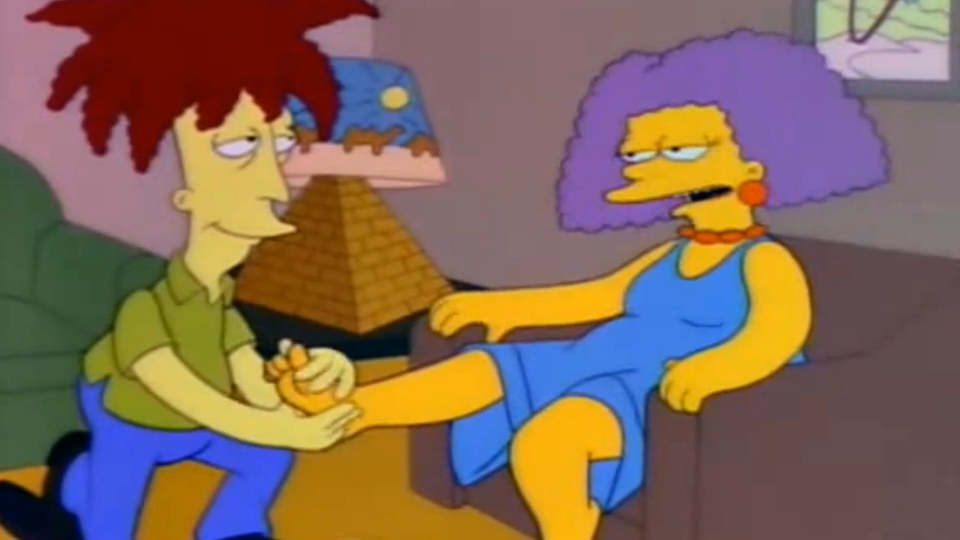
Patty and Selma are Marge's sisters, so they're well known as a pair, although they rarely did much individually. This episode was an exception, where Selma got engaged to Sideshow Bob. While they were discussing the wedding catering, she said that she didn't care what they ate (similar to Mr Wormold in entry 6):
"Well, when I was a kid, were were playing with bottle rockets, and one shot straight up my nose. I permanently lost my sense of taste and smell."
This turned out to be essential to the plot, although I won't elaborate on that to avoid spoilers.
2. Odo ("Star Trek: Deep Space Nine").
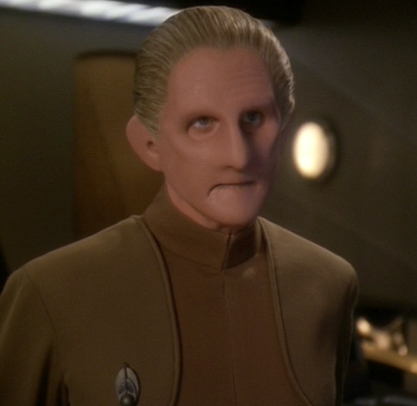
In DS9, Odo is a shapeshifter. His natural state is a liquid: while he can take other forms, he's effectively a waxwork, i.e. he only modifies his surface appearance and he doesn't have any internal organs. There are two episodes where he explicitly states that he can't smell anything, although he can see and hear. He's a major character in the series, but his anosmia was only a minor plot point.
Interestingly, there's a later episode where he is able to smell. It's entirely possible that this was just a continuity error, but I think there's a convincing explanation for this. During the course of the series, he gradually gets better at shapeshifting, partly as a result of some circumstances that are forced upon him. For instance, there's one episode where Dr Bashir tells Odo that he's standing too straight. Odo objects that he's always stood like that, and Bashir retorts that he didn't always have a spinal column. Based on that, I think it's plausible that he learnt how to construct the olfactory nerve, giving himself a sense of smell.
So, that's why he gets the number 2 slot here: I choose to interpret this as a long term character arc, where a congenital anosmic acquires a cure!
1. Alan A. Allen ("Thunderpants").
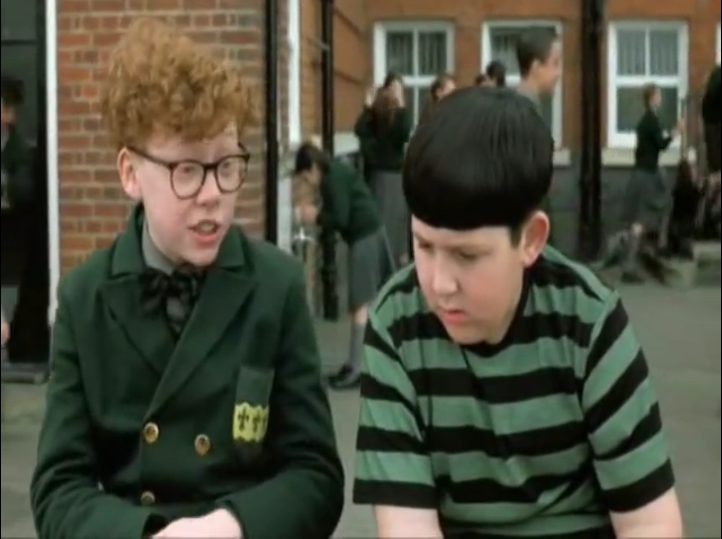
"Thunderpants" is not going to go down as one of the greatest films of all time. It's not exactly subtle: the basic concept is that the protagonist (Patrick Smash) has chronic flatulence. He farts continuously, to the extent that his family all wear gas masks (even the dog) and nobody will sit near him at school so he doesn't have any friends.
This is where Alan A. Allen comes in (played by Rupert Grint from the "Harry Potter" films). He doesn't have a sense of smell, so the farting doesn't bother him. The two of them wind up working for the space program, the idea being that they can stick Patrick in the top of a rocket and his farts will power it into orbit.
However, Alan is one of the two lead characters, and his anosmia is vital to the plot. He's also the only child in this list, which would have made it easier for me to identify with him at that age, and the plot is something that's likely to appeal to children (so it's something I would have watched if it had come out 20 years earlier). Based on that, Alan is my number 1 fictional character with anosmia!
So, adding up the demographics, that's a final count of:
Personally, I have congenital anosmia, although it took me several years to figure this out! As a young child, I was told that everyone had a sense of smell, so I naturally assumed that I did too. I learnt to mimic the behaviour of people around me so that I could react appropriately. For instance, if I heard someone fart, I could clutch my nose, pretend to be choking, and say things like "Gah! Someone open a window! My god, dude, what did you eat?!" At the same time, I was baffled by the way that my friends sometimes seemed to have X-ray vision, e.g. they'd know what my mum was cooking for dinner even when we were upstairs with no line of sight.
I eventually confronted this when I was about 10. This was in the 1980s, and the TV guide included a "scratch and sniff" card. The idea was that a particular TV program would make use of this: they'd flash up a blue square in the corner of the screen, then you'd scratch off the blue square on your card, and you'd smell something that matched what you saw on screen. I assume that the goal was to make a more immersive experience, similar to 3D, but it doesn't really seem to have caught on. Anyway, I scratched off one of the squares and sniffed it, but nothing happened. I assumed that square didn't work, so I went through the rest of the card, with a similar lack of reaction. In hindsight, I feel slightly guilty about depriving the rest of my family of the opportunity to use the card as intended, but it did lead me to an important realisation.
This predates the World Wide Web, and I'd never heard of anyone else with this condition. So, as far as I knew I was the only person in the world like this. That's why it took me so long to believe it; in a similar way, I've never seen my own lungs, but I'm pretty sure I have them (because everyone does), and it would take a lot of evidence for me to think otherwise.
Once I'd accepted this, I went to see a doctor, who was also sceptical: he'd never heard of this before, and thought that I was just making it all up for attention. So, he did some tests where he blindfolded me and then waved stuff under my nose, the idea being that I wouldn't be able to control my instinctive reaction (or revulsion). I passed those tests, but he couldn't help, so he referred me elsewhere. The second doctor looked at the first doctor's notes and basically said: "That quack doesn't know what he's talking about, everyone has a sense of smell. You may have fooled him, but you won't fool me, let's run those tests again." Again, I passed the tests, but it didn't achieve much. An X-ray revealed a bone blockage in my nose, and I had surgery to drill through it. Unfortunately, the only result was that I became susceptible to hayfever, when I was immune before. At this point, I'm basically resigned to the idea that I'm never going to be cured.
Anyway, things would have been a lot easier for me if I'd actually known that anosmia existed, i.e. that I might fall into an existing category rather than being some unprecedented freak of nature. That brings me back to where I started: I want to raise awareness, so that other people have an easier time. Even if you can smell, just being willing to believe that other people can't (rather than subjecting them to the Blindfold Trial of Doom) would be helpful.
This is where representation helps: it's nice to see stories about people like you, and it could also be someone's first exposure to the idea that anosmia exists. So, I've been making a list of "fictional characters with anosmia" for several years, and here are my top 10. (I was planning to do this as a YouTube video, with the relevant clips as supporting evidence, but I ran out of time and I wanted to get something out today. Consider this a sneak preview!) I've sorted them based on a couple of factors: how prominent is the character, and how significant is their anosmia to the plot?
I've only included characters who explicitly state that they can't smell anything. There are several others who never mentioned smells, and therefore it's possible that they're anosmic. However, that's where you get into the realm of subtext and authorial retcons (e.g. "Dumbledore was gay but it never came up in the books"). That doesn't help to raise awareness, so they don't count for my purposes.
10. Dr Bradbury from "Damnation Station" (2000AD Prog 1692).
There's a scene set after an attack, where the doctor starts eating a sandwich. Someone else is surprised:
"God, how can you eat? This whole room stinks of burnt flesh -"
"No sense of smell, man. Plus I'm totally desensitised to pretty much anything at this point."
The comic doesn't specify whether his anosmia is acquired or congenital, and it's never mentioned again.
That's about all I have to say about that one; the fact that this made it into my "top 10" gives some idea about the paucity of suitable candidates!
9. Chris from Cheesoid ("That Mitchell and Webb Look", S2 E3).
Chris is a chef who gets mugged. The attacker breaks his nose, removing his sense of smell (acquired anosmia), so he tries to build a robot that can smell for him. The TV series is a sketch show, so this character only appeared for a few minutes. However, the anosmia was essential to the plot.
8. Twoflower (Terry Pratchett's "Discworld" novels).
In "The Light Fantastic" (p228 of my paperback copy), a group of characters are approaching Ankh-Morpork and Pratchett comments on how bad it smells. "Rincewind sat bolt upright and said 'We're here', Bethan went pale and Twoflower, who had no sense of smell, said, 'Really? How can you tell?'"
Twoflower only appeared in 3 books out of the series, but anyone who's read those books will remember who he was, so I'd say that he's a fairly prominent character in the series. However, this was just a brief aside (similar to Dr Bradbury in entry 10); it wasn't particularly important to the plot, and it never came up again. Similarly, the source of his anosmia was never revealed.
7. Mr Blair ("Scrubs" S2 E5).
This was a "patient of the week" scenario, where he developed anosmia as a new symptom (i.e. it was acquired). So, it was significant to the plot of this episode, but most people who've watched the whole series probably wouldn't remember it at all. It mainly struck me as notable because of the way it's introduced. The doctor (JD) was paged, and the nurse reported that "The patient is complaining of anosmia." The nurse didn't explain beyond that, and the doctor knew what the word meant, although there was some expository dialogue for the audience's benefit. They also believed the patient immediately, rather than accusing him of lying. After my experiences with the medical profession, this was a welcome change!
6. Mr Wormold ("Betty Blue Eyes").
"Betty Blue Eyes" is a musical that's adapted from a film ("A Private Function"), although I've only seen the stage version. It's set in the late 1940s: after the war, but while food rationing was still going on. A group of people in a village decide to raise their own pig so that they can get extra meat. Apparently this was illegal (I'm not sure why), and a meat inspector started snooping around.
At one point, the inspector (Mr Wormold) was talking to his landlady. She asked whether he'd enjoyed his meal, and he said:
"I don't enjoy food, Mrs Forbes. I have no sense of taste, no sense of smell. I had German measles as a child."
So, this is a case of acquired anosmia. I wouldn't say that it was integral to the plot, but perhaps it informs his character, i.e. he's not going to be bribed by extra food because he doesn't get any pleasure from eating it. The character is significant to the story.
5. Marianne ("Futurama", S10 E12).
Dr Zoidberg starts dating a flower seller. Nobody else can understand how she puts up with his stench, until it's explained that she was born without a sense of smell. The main plot involves a moral dilemma for Zoidberg: he could perform surgery to give her a nose transplant, but then she would realise what he smells like and dump him. So, her anosmia is absolutely essential to the plot, although the character only appeared in one episode.
4. Angel Dynamite ("Scooby Doo: Mystery Incorporated", S1 E16).
I started watching this series after I'd heard about an anosmic character, but it's actually really good on its own merits, so I highly recommend it.
One of the supporting characters is Skipper Shelton, who's basically a parody of Captain Ahab: a clam cut off his nose, so now he runs a clam restaurant as a form of revenge. In an early episode, they established that he could smell, which doesn't really make sense. So, a dishonourable mention there. However, the series redeemed itself later on.
In "Where Walks Aphrodite", a chemist zaps everyone in town with a love potion (based on pheremones). Scooby-Doo is immune because he's a dog, but the humans are all out of action. Or rather, all but one: Angel Dynamite was born with no sense of smell, so she doesn't get infected. I'm honestly not sure whether pheremones work on anosmics; the bigger question is whether they work at all, given that it's all supposed to be subconscious. Still, I'll accept it for the purposes of the story.
Now we're making progress: Angel appeared in most episodes of the series, so she's a major character and her anosmia was relevant to the plot!
3. Selma Bouvier ("The Simpsons", S3 E21).
Patty and Selma are Marge's sisters, so they're well known as a pair, although they rarely did much individually. This episode was an exception, where Selma got engaged to Sideshow Bob. While they were discussing the wedding catering, she said that she didn't care what they ate (similar to Mr Wormold in entry 6):
"Well, when I was a kid, were were playing with bottle rockets, and one shot straight up my nose. I permanently lost my sense of taste and smell."
This turned out to be essential to the plot, although I won't elaborate on that to avoid spoilers.
2. Odo ("Star Trek: Deep Space Nine").
In DS9, Odo is a shapeshifter. His natural state is a liquid: while he can take other forms, he's effectively a waxwork, i.e. he only modifies his surface appearance and he doesn't have any internal organs. There are two episodes where he explicitly states that he can't smell anything, although he can see and hear. He's a major character in the series, but his anosmia was only a minor plot point.
Interestingly, there's a later episode where he is able to smell. It's entirely possible that this was just a continuity error, but I think there's a convincing explanation for this. During the course of the series, he gradually gets better at shapeshifting, partly as a result of some circumstances that are forced upon him. For instance, there's one episode where Dr Bashir tells Odo that he's standing too straight. Odo objects that he's always stood like that, and Bashir retorts that he didn't always have a spinal column. Based on that, I think it's plausible that he learnt how to construct the olfactory nerve, giving himself a sense of smell.
So, that's why he gets the number 2 slot here: I choose to interpret this as a long term character arc, where a congenital anosmic acquires a cure!
1. Alan A. Allen ("Thunderpants").
"Thunderpants" is not going to go down as one of the greatest films of all time. It's not exactly subtle: the basic concept is that the protagonist (Patrick Smash) has chronic flatulence. He farts continuously, to the extent that his family all wear gas masks (even the dog) and nobody will sit near him at school so he doesn't have any friends.
This is where Alan A. Allen comes in (played by Rupert Grint from the "Harry Potter" films). He doesn't have a sense of smell, so the farting doesn't bother him. The two of them wind up working for the space program, the idea being that they can stick Patrick in the top of a rocket and his farts will power it into orbit.
However, Alan is one of the two lead characters, and his anosmia is vital to the plot. He's also the only child in this list, which would have made it easier for me to identify with him at that age, and the plot is something that's likely to appeal to children (so it's something I would have watched if it had come out 20 years earlier). Based on that, Alan is my number 1 fictional character with anosmia!
So, adding up the demographics, that's a final count of:
- 3 congenital (Marianne, Angel Dynamite, Odo)
- 4 acquired (Chris, Mr Blair, Mr Wormold, Selma Bouvier)
- 3 unspecified (Dr Bradbury, Twoflower, Alan A. Allen)
no subject
I think anosmia has come up in my training. I don't remember that it has for sure and most of my classmates probably wouldn't know what anosmia means, but we're training to be physiotherapists so it's not something we need to give much thought to. Treatment, understand and survival of people with brain injuries and stroke in particular has come on a lot in the last few decades, so I think it's much more likely that anyone working with neurological patients will be aware of acquired anosmia now.