Sine of the times
Oct. 31st, 2020 10:33 pm![[personal profile]](https://www.dreamwidth.org/img/silk/identity/user.png) johnckirk
johnckirkDue to the COVID-19 pandemic, people need to take precautions to stop the virus spreading. In particular, if you meet people outside your household (or support bubble):
However, the downside of meeting outside in winter is that it gets cold! A solution is to sit in a circle around a bonfire, but that raises new questions: how should you position everyone in order to maintain the minimum distance? And will people actually be close enough to the fire to feel the heat at that point? This calls for trigonometry!
NB As I type this, England is about to go into a second lockdown (starting on Thu 5th November). At that point, you won't be allowed to visit friends in other households at all. However, this will be relevant for the next few days, and if/when the lockdown eases.
For now, let's assume that each person comes from a different household. It makes sense to position these people at equidistant intervals around the circle.

The "rule of 6" says that you can have up to 6 people in total.
2 people
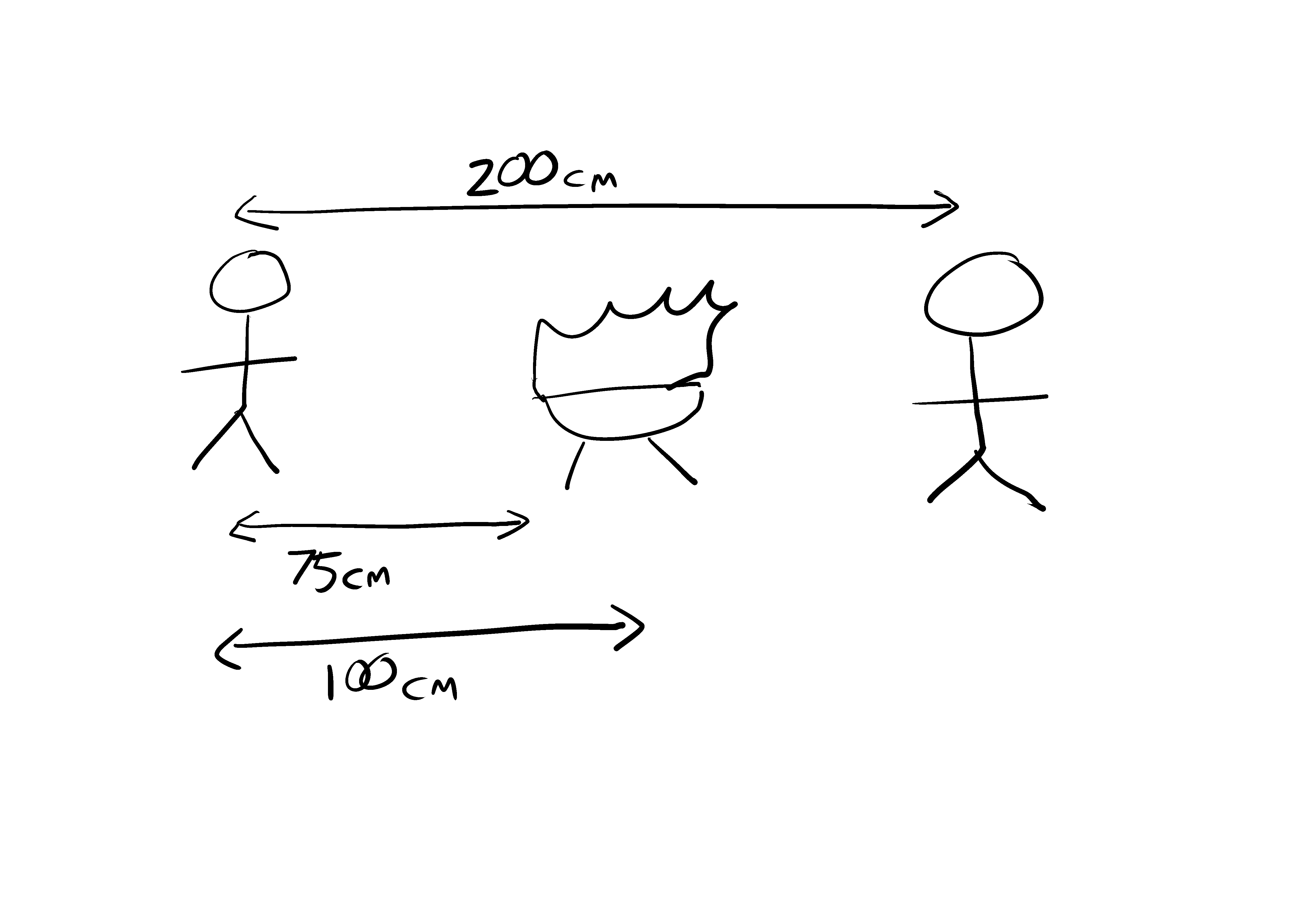
This is pretty simple: you sit 2m apart, with the fire pit in the middle. So, the radius of the circle is 1m. My fire pit is 50cm across (i.e. its radius is 25cm). That means that each person will be 75cm from the edge of the pit.
3 people
With more than 2 people, you can draw a line between each person and their closest neighbour. Each of these lines is a chord, joining 2 points on the circumference of the circle. That chord needs to be 2m long, but what should the radius of the circle be?
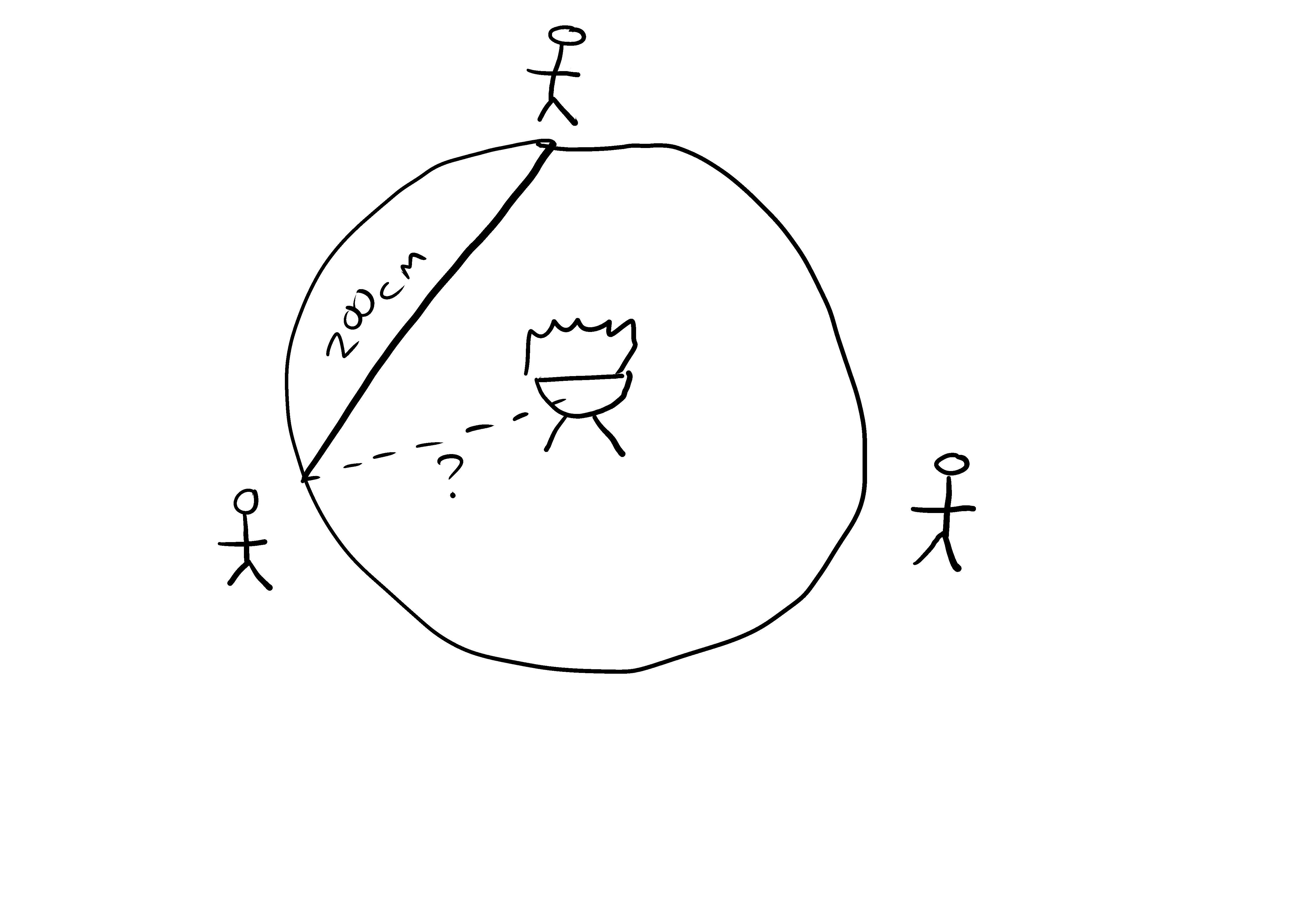
Pick 2 adjacent people, and look at their wedge of the circle.
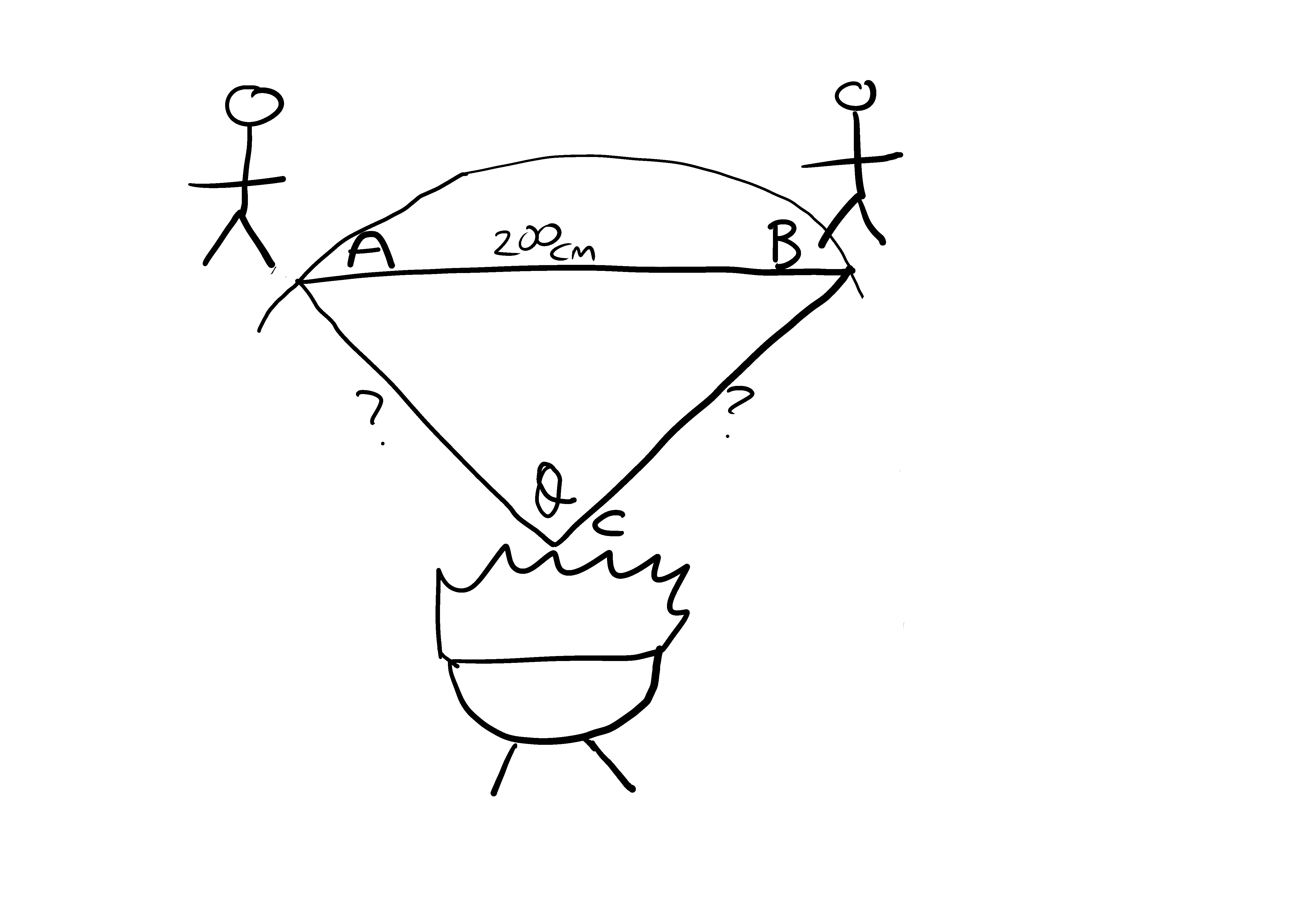
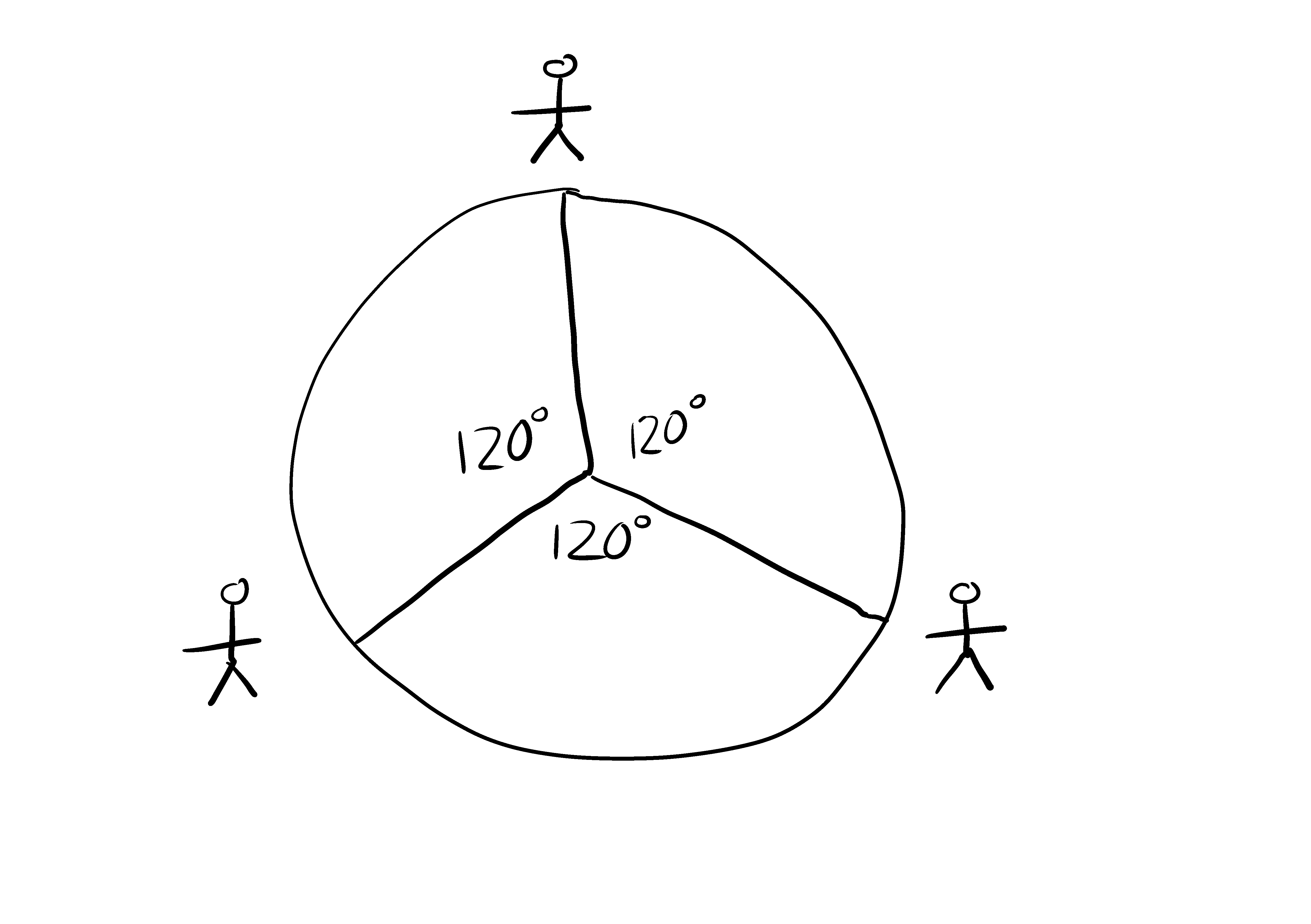
This forms an isosceles triangle, i.e. the distance from A to C (AC) equals the distance from B to C (BC) because they are both equal to the radius of the circle. That means that the angles at A and B will also be equal. We'll designate the angle at point C as θ (the Greek letter "theta"), and we can calculate it as 360°/3 = 120°. (The complete circle is 360°, and there are 3 pairs of adjacent people, so each pair gets 1/3 of the complete circle = 120°.)
The next step is to split the isosceles triangle in half, so that we get 2 right angled triangles:

Point D is halfway between points A and B. So, if the original chord (AB) was 2m, that means that AD = DB = 1m.
We can now use "SOHCAHTOA" (pronounced "sock-a-toe-uh"). Other mnemonics are available, but this one has successfully stuck in my mind for decades! In other words, for a right-angled triangle and an angle x:
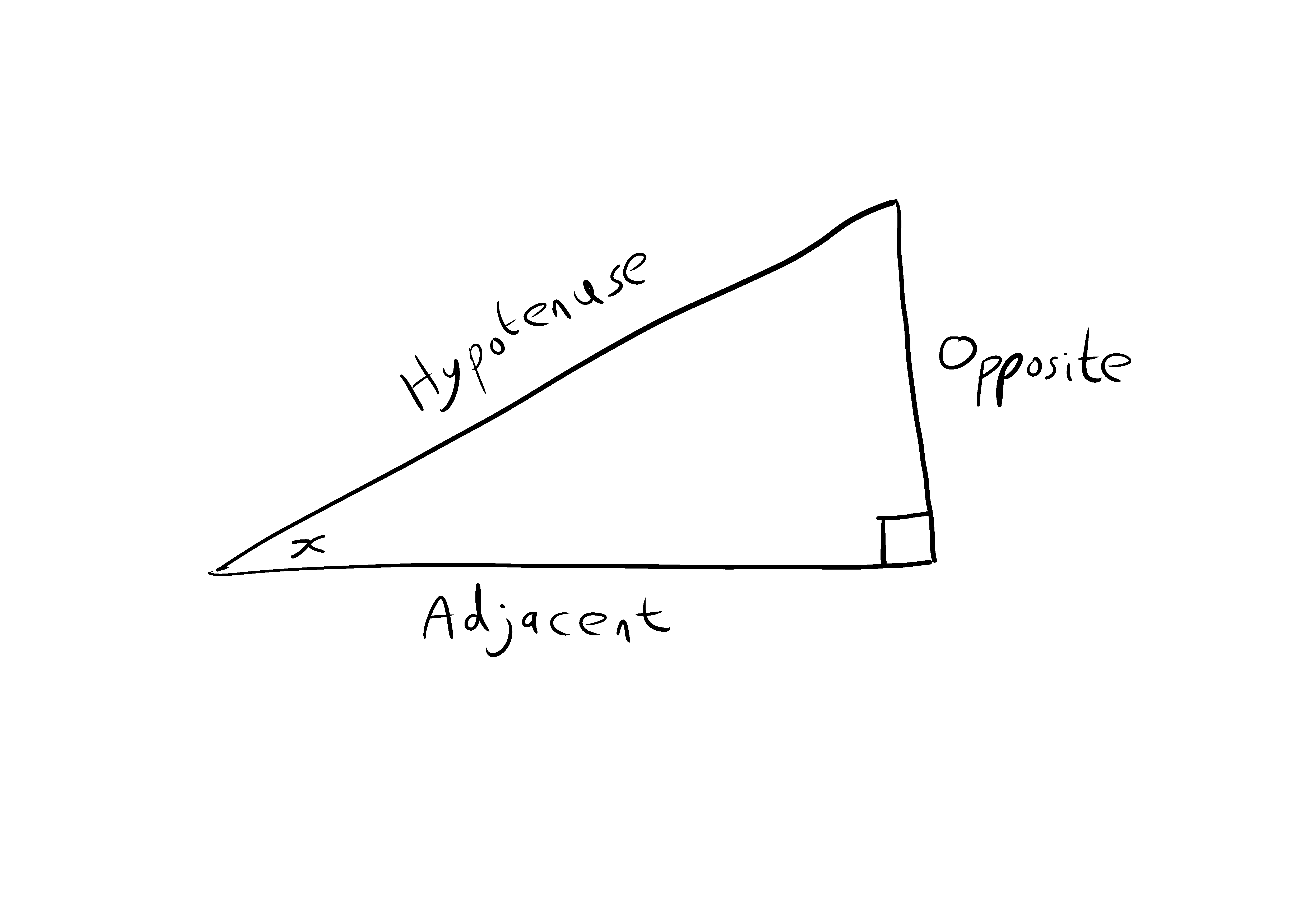
NB The opposite/adjacent sides are defined based on the angle that you use. "sin" is the Sine function, "cos" is the Cosine function, and "tan" is the Tangent function. (Hence my pun in the title.)
Coming back to our example, and looking at one of the new triangles (ADC), we can say that sin(θ/2) = AD/AC, therefore AC = AD/sin(θ/2). We know that AD = 1m = 100cm (see above), and we know that θ = 120°C, so θ/2 = 60°. Substituting those values into the equation:
sin(60°) ~= 0.87
So, AC = 100cm / sin(60°) ~= 100/0.87 ~= 115cm.
"~=" means "approximately equal", i.e. I'm rounding off to a couple of decimal places.
4 people
Again, we can draw chords between adjacent people:
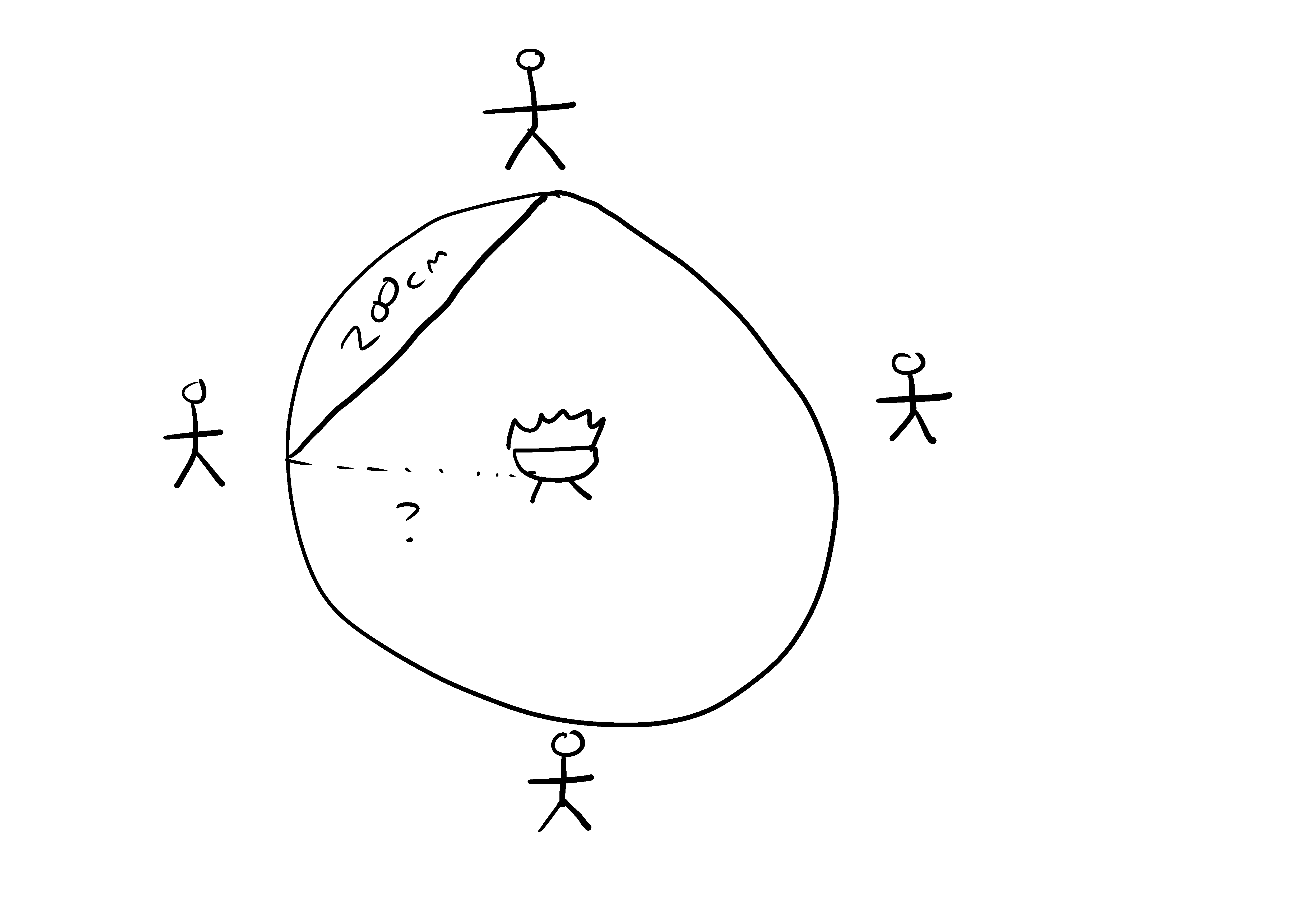
We wind up with the same triangle and equation as before:
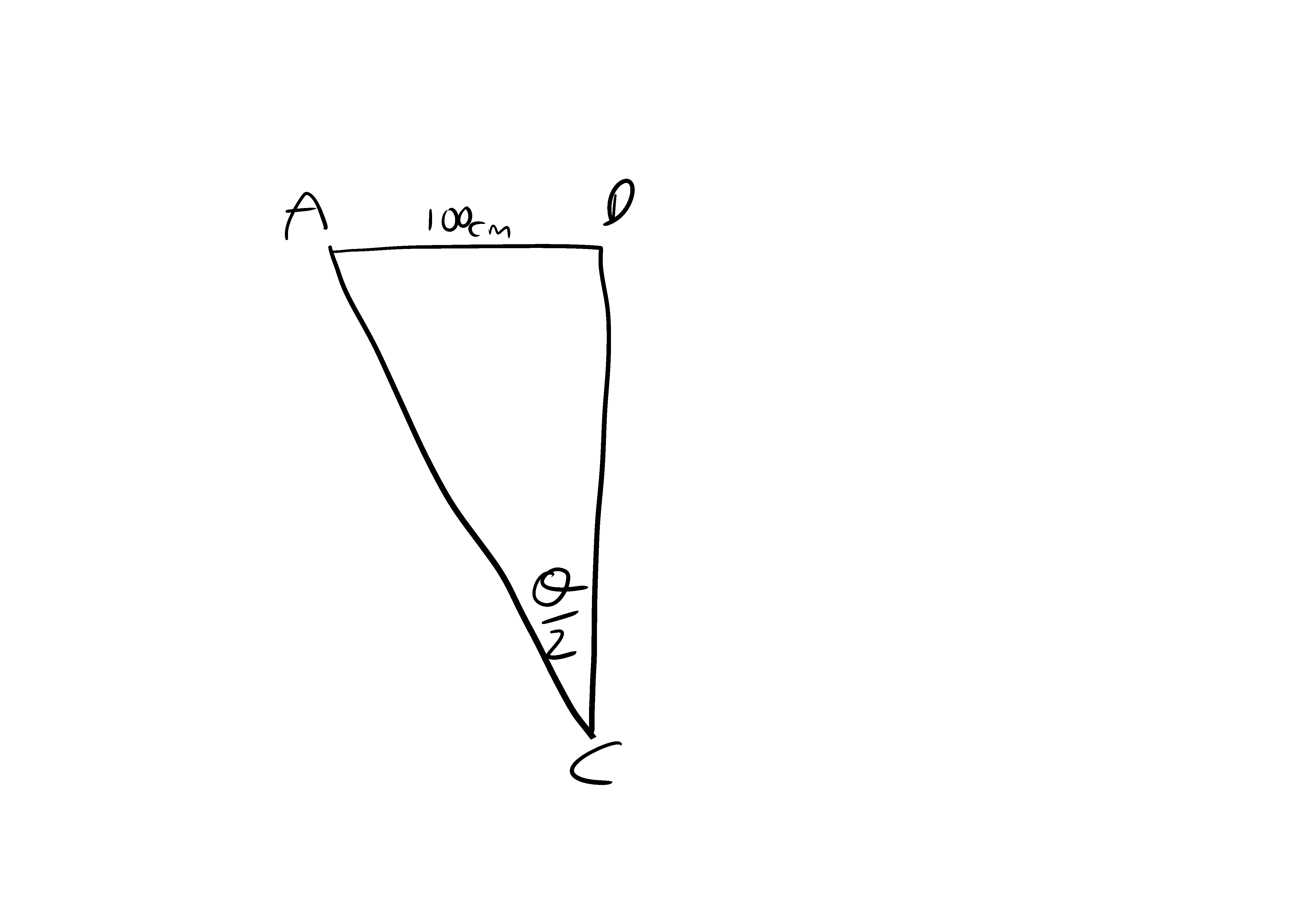
AC = AD/sin(θ/2)
However, θ now has a different value: 360°/4 = 90°.

So, θ/2 = 45°, and sin(θ/2) = sin(45°) ~= 0.71
So, AC ~= 100cm/0.71 ~= 141cm.
5 people
Again, we look at the angle between adjacent people:
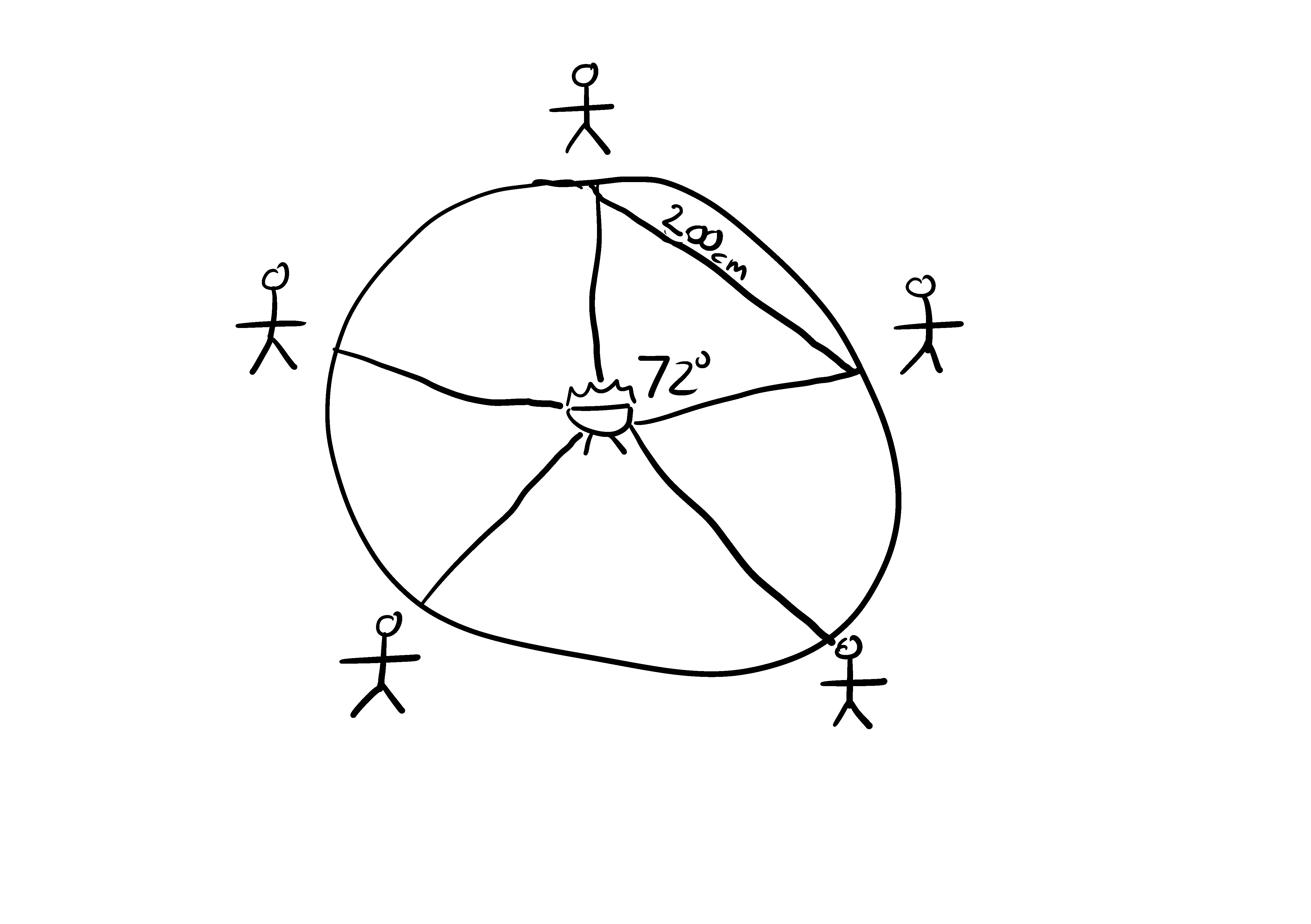
In this case, θ = 360°/5 = 72°, so θ/2 = 36°
sin(θ/2) = sin(36°) ~= 0.59
So, AC ~= 100cm/0.59 ~= 170cm.
6 people
Again, we look at the angle between adjacent people:

In this case, θ = 360°/6 = 60°, so θ/2 = 30°
sin(θ/2) = sin(30°) = 0.5
So, AC = 100cm/0.5 = 200cm.
NB Unlike the previous few examples, these figures are precise. That's because this is a special case: triangle ABC is still an isosceles triangle (with 2 sides the same length) but it's also an equilateral triangle (with all 3 sides the same length). You can verify that based on the angles for triangle ADC:
Point A will still have the same angle for both triangles (ABC and ADC), i.e. 60°.
Point B has an identical angle to point A (because triangles ADC and BDC are symmetrical), so that's also 60°.
In triangle ABC, point C has the the original angle θ, which is also 60°.
A + B + C = 60° x 3 = 180°, which is correct.
So, this means that you could actually deduce the radius of the circle without needing a calculator to work out the sine value. However, it's probably easier to apply the same technique for any number of people (higher than 1).
Summary
NB This is further than you might expect! I.e. with 6 people (all from different households), the people who are directly opposite each other will need a 4m gap between them in order to keep a 2m gap from their immediate neighbours.
Whether you can keep warm at that distance from the fire will depend on other factors, e.g. what you're wearing and how much wood you pile on the fire. However, this should help you to position chairs and make an informed decision.
Other
There is scope for further variations, which is left as an exercise for the reader... For instance, suppose that you had 6 people, but they were in 3 pairs (2 people per household) or 2 triples (3 people per household)? More generally, the diagrams assume that each person is a tiny dot, and doesn't allow for their body size. People might also want to move around a little bit, e.g. if there's smoke from the fire blowing towards them.
As I understand it, 2m is the ideal distance, but 1m is the minimum to be safe. So, if you plan for 2m using this approach, you should be fairly confident that you'll be at least 1m away. By contrast, if you plan for 1m then you could end up rubbing shoulders with people.
- Wear masks
- It's safer to meet outside rather than inside (better ventilation)
- Stay 2m away from each other
However, the downside of meeting outside in winter is that it gets cold! A solution is to sit in a circle around a bonfire, but that raises new questions: how should you position everyone in order to maintain the minimum distance? And will people actually be close enough to the fire to feel the heat at that point? This calls for trigonometry!
NB As I type this, England is about to go into a second lockdown (starting on Thu 5th November). At that point, you won't be allowed to visit friends in other households at all. However, this will be relevant for the next few days, and if/when the lockdown eases.
For now, let's assume that each person comes from a different household. It makes sense to position these people at equidistant intervals around the circle.
The "rule of 6" says that you can have up to 6 people in total.
2 people
This is pretty simple: you sit 2m apart, with the fire pit in the middle. So, the radius of the circle is 1m. My fire pit is 50cm across (i.e. its radius is 25cm). That means that each person will be 75cm from the edge of the pit.
3 people
With more than 2 people, you can draw a line between each person and their closest neighbour. Each of these lines is a chord, joining 2 points on the circumference of the circle. That chord needs to be 2m long, but what should the radius of the circle be?
Pick 2 adjacent people, and look at their wedge of the circle.
This forms an isosceles triangle, i.e. the distance from A to C (AC) equals the distance from B to C (BC) because they are both equal to the radius of the circle. That means that the angles at A and B will also be equal. We'll designate the angle at point C as θ (the Greek letter "theta"), and we can calculate it as 360°/3 = 120°. (The complete circle is 360°, and there are 3 pairs of adjacent people, so each pair gets 1/3 of the complete circle = 120°.)
The next step is to split the isosceles triangle in half, so that we get 2 right angled triangles:
Point D is halfway between points A and B. So, if the original chord (AB) was 2m, that means that AD = DB = 1m.
We can now use "SOHCAHTOA" (pronounced "sock-a-toe-uh"). Other mnemonics are available, but this one has successfully stuck in my mind for decades! In other words, for a right-angled triangle and an angle x:
- sin(x) = Opposite/Hypotenuse
- cos(x) = Adjacent/Hypotenuse
- tan(x) = Opposite/Adjacent
NB The opposite/adjacent sides are defined based on the angle that you use. "sin" is the Sine function, "cos" is the Cosine function, and "tan" is the Tangent function. (Hence my pun in the title.)
Coming back to our example, and looking at one of the new triangles (ADC), we can say that sin(θ/2) = AD/AC, therefore AC = AD/sin(θ/2). We know that AD = 1m = 100cm (see above), and we know that θ = 120°C, so θ/2 = 60°. Substituting those values into the equation:
sin(60°) ~= 0.87
So, AC = 100cm / sin(60°) ~= 100/0.87 ~= 115cm.
"~=" means "approximately equal", i.e. I'm rounding off to a couple of decimal places.
4 people
Again, we can draw chords between adjacent people:
We wind up with the same triangle and equation as before:
AC = AD/sin(θ/2)
However, θ now has a different value: 360°/4 = 90°.
So, θ/2 = 45°, and sin(θ/2) = sin(45°) ~= 0.71
So, AC ~= 100cm/0.71 ~= 141cm.
5 people
Again, we look at the angle between adjacent people:
In this case, θ = 360°/5 = 72°, so θ/2 = 36°
sin(θ/2) = sin(36°) ~= 0.59
So, AC ~= 100cm/0.59 ~= 170cm.
6 people
Again, we look at the angle between adjacent people:
In this case, θ = 360°/6 = 60°, so θ/2 = 30°
sin(θ/2) = sin(30°) = 0.5
So, AC = 100cm/0.5 = 200cm.
NB Unlike the previous few examples, these figures are precise. That's because this is a special case: triangle ABC is still an isosceles triangle (with 2 sides the same length) but it's also an equilateral triangle (with all 3 sides the same length). You can verify that based on the angles for triangle ADC:
- At point C, θ/2 = 30°
- At point D, the right angle is 90°
- All the angles in a triangle add up to 180°
- So, at point A, the angle must be 60°
Point A will still have the same angle for both triangles (ABC and ADC), i.e. 60°.
Point B has an identical angle to point A (because triangles ADC and BDC are symmetrical), so that's also 60°.
In triangle ABC, point C has the the original angle θ, which is also 60°.
A + B + C = 60° x 3 = 180°, which is correct.
So, this means that you could actually deduce the radius of the circle without needing a calculator to work out the sine value. However, it's probably easier to apply the same technique for any number of people (higher than 1).
Summary
- For 2 people, each person should sit 100cm from the centre of the circle. (75cm from my fire pit.)
- For 3 people, each person should sit 115cm from the centre of the circle. (90cm from my fire pit.)
- For 4 people, each person should sit 141cm from the centre of the circle. (116cm from my fire pit.)
- For 5 people, each person should sit 170cm from the centre of the circle. (145cm from my fire pit.)
- For 6 people, each person should sit 200cm from the centre of the circle. (175cm from my fire pit.)
NB This is further than you might expect! I.e. with 6 people (all from different households), the people who are directly opposite each other will need a 4m gap between them in order to keep a 2m gap from their immediate neighbours.
Whether you can keep warm at that distance from the fire will depend on other factors, e.g. what you're wearing and how much wood you pile on the fire. However, this should help you to position chairs and make an informed decision.
Other
There is scope for further variations, which is left as an exercise for the reader... For instance, suppose that you had 6 people, but they were in 3 pairs (2 people per household) or 2 triples (3 people per household)? More generally, the diagrams assume that each person is a tiny dot, and doesn't allow for their body size. People might also want to move around a little bit, e.g. if there's smoke from the fire blowing towards them.
As I understand it, 2m is the ideal distance, but 1m is the minimum to be safe. So, if you plan for 2m using this approach, you should be fairly confident that you'll be at least 1m away. By contrast, if you plan for 1m then you could end up rubbing shoulders with people.


